
For the ASA DataFest, we worked with a hospital and were given interaction data. It was a few datasets with relational IDs that could link patients to times they came to the hospital, doctors, physicians, and what they came in for. We were tasked to use data analytics techniques to find patterns in the data. I was partnered with 2 other new data science students.
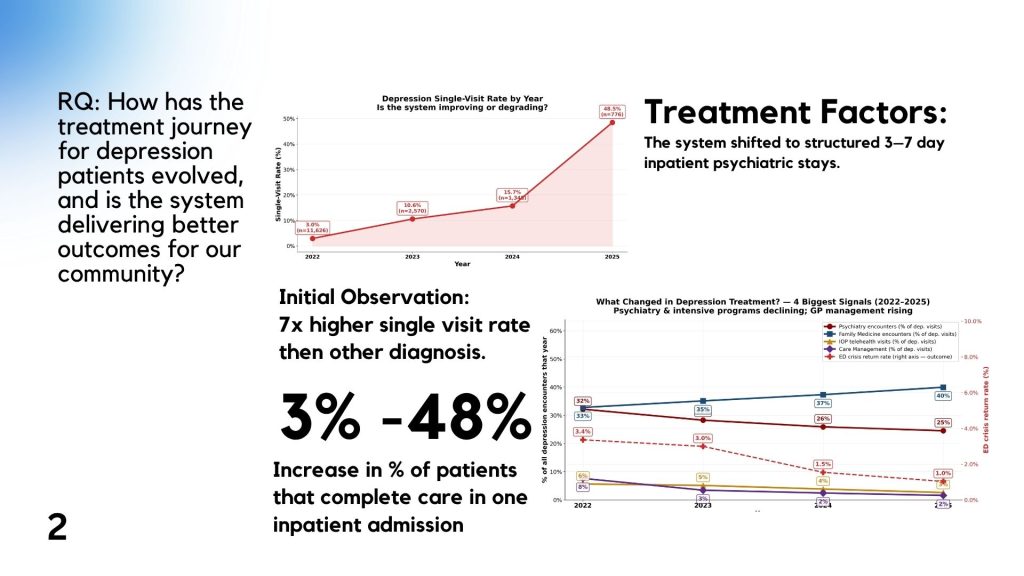
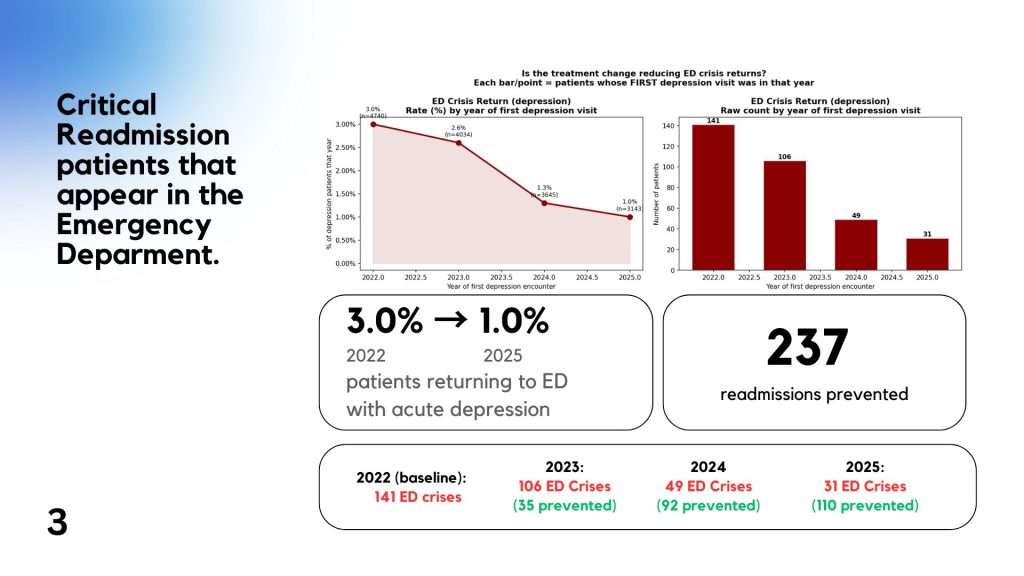
We found that through all types of interactions, we see that patients admitted for depression have a low rate of coming back to the hospital compared to the rest of the diagnoses. We also see that this pattern is increasing over time, meaning we are increasingly seeing patients admit once with depression and never show signs again. We found that we can attribute this change to a difference in treatment, as the rates of 3–7 day stays for depressed patients are increasing, leading to the finding that when looking at the most critical patients with depression (patients that returned to the emergency department with worse depression symptoms), this rate is decreasing from 3% to 1%. Our initial idea was that the increase in patients not returning to the hospital was bad, but we found that it’s because treatment has been changing we find that the system is working better!! It changed from repeated visits to a psychologist to a 3–7 day stay in a psychiatric facility and it meant the readmittance rate of patients with worsening symptoms decreased, leading to 237 admissions saved over the last 3 years and 141 depression crises averted.